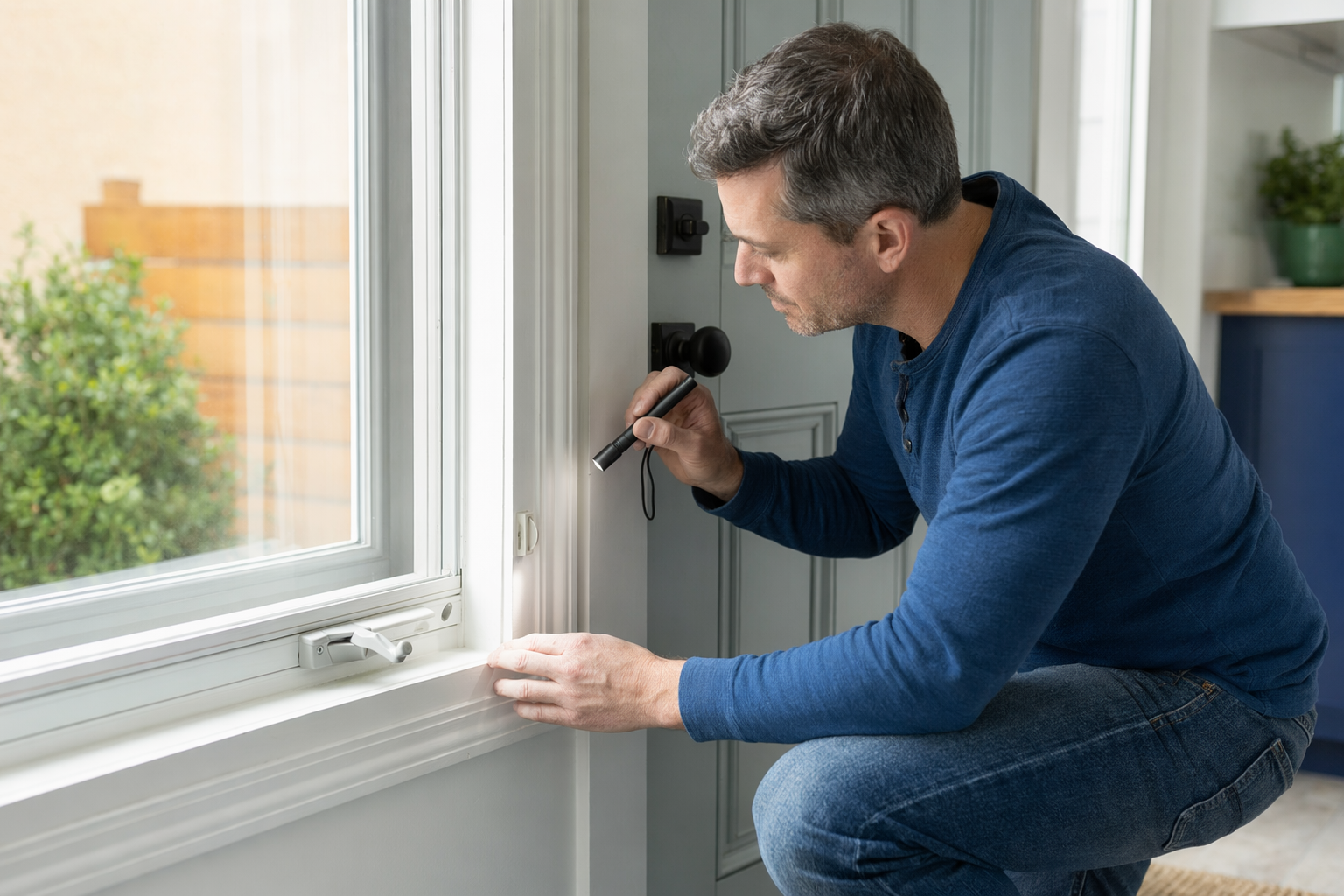
The situation
A renter in a mid-size US city wanted better protection after a break-in happened in the same apartment complex. They did not want to do anything that would violate the lease, damage walls or doors, or lock them into an expensive long contract they did not understand.
Their goals were simple:
- know what was worth protecting first
- understand typical cost ranges before talking to anyone
- avoid door-to-door or phone pressure
- find licensed, insured, properly registered local companies to compare
They were deciding between a basic home security system, a few security cameras, and optional professional monitoring. They also checked whether a smart lock change was allowed under the lease before considering any access-control upgrade.
One important limit: because this was a rental, they could not assume they were free to drill, rewire, replace building hardware, or change common-area security. That meant the best plan had to fit the apartment, the lease, and the landlord's rules.
What they decided to protect first
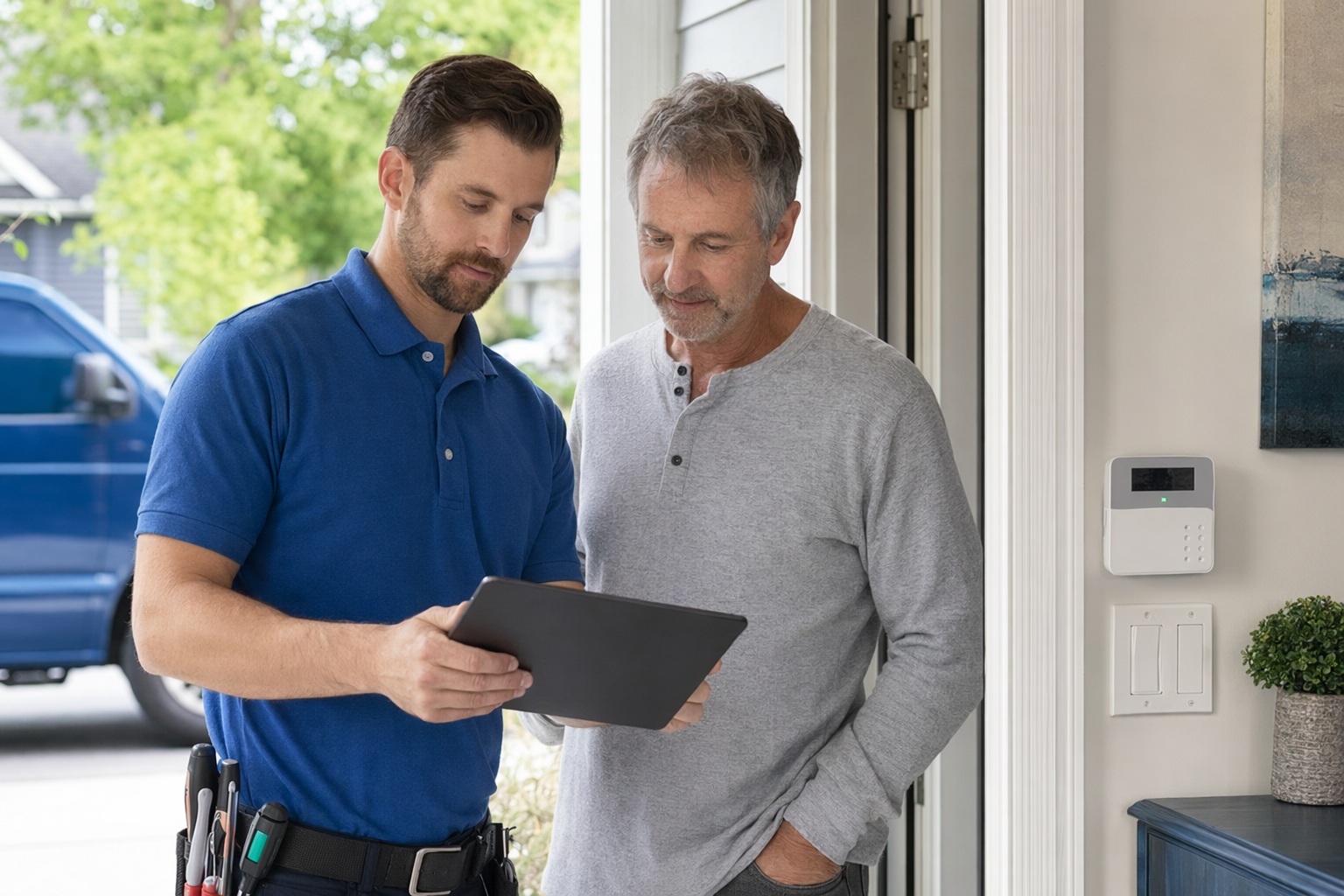
Instead of buying everything at once, they made a short list of the biggest concerns inside their own unit.
- Front door awareness. They wanted to know if the apartment door opened while they were away.
- Main living area. They wanted one indoor camera pointed at the entry path, not at private areas.
- Windows that were easy to reach. Ground-floor and balcony access mattered more than every window.
- A simple way to arm and disarm. Nothing complicated.
That narrowed the options. A full, heavily wired setup did not make sense. A renter-friendly system with door and window sensors, one or two cameras, and optional monitoring made more sense.
They also set rules for themselves before talking to companies:
- no signing at the door
- no same-day decision under pressure
- no unclear monthly fee
- no contract until they read the cancellation and auto-renewal terms
That last point mattered. Alarm contracts can include contract length, equipment terms, monitoring obligations, and early-termination fees. Before signing anything, they used a simple alarm contract checklist and wrote down questions in plain language.
How they compared options without getting pushed
The renter first reviewed typical security costs so they could tell the difference between a normal estimate and a sales pitch.
The ranges they saw were realistic:
- alarm equipment: roughly $200-$600+ depending on features and whether the setup was DIY or professionally installed
- professional monitoring: roughly $15-$60 per month
- cameras: roughly $50-$300 each plus any cloud-storage fee
- professional installation: roughly $100-$400 one-time if needed
- smart lock or access control hardware: roughly $120-$500 per door, if the lease allows it
These are typical ranges, not quotes or guarantees. The real price depends on the system, the apartment layout, monitoring, installation, and the area.
Then the renter asked to be matched with local companies through a free service. KeepWatchly did not sell or install anything. It simply helped them compare local options. Matching was free to the renter.
When sharing contact details, they paid attention to consent language. They understood that if they agreed to be contacted, it could include calls, SMS, and messages using autodialed or prerecorded technology, but that consent is not a condition of any purchase and they could opt out anytime.
When companies called, the renter asked the same questions every time:
- Are you licensed, insured, and properly registered in this state and city, if required?
- Is this a month-to-month plan or a long contract?
- What is the monitoring fee?
- Is installation required?
- What happens if I move before the contract ends?
- Does the equipment stay with me or the property?
- Are there cloud fees, activation fees, or cancellation fees?
They also verified the company's license or registration themselves, because some states separately regulate alarm solicitation, sales, installation, or monitoring.
The setup they chose
In the end, the renter did not choose the biggest package. They chose the setup that fit the apartment and the lease:
- a small alarm system with entry sensors on the front door and key windows
- one indoor camera covering the entry path
- one outdoor-facing camera only where allowed by the lease and building rules
- optional professional monitoring at a monthly rate they could afford
They skipped extras they did not need right away. No large equipment bundle. No complicated automation. No verbal promises.
The estimated first costs looked something like this:
- equipment: in the low-to-mid part of the $200-$600+ range
- one-time installation: either $0 if self-installed correctly, or roughly $100-$400 if professional installation was needed
- monitoring: around the lower-middle part of the $15-$60 per month range
- camera costs: based on the number selected, within the normal $50-$300 each range
Before signing, the renter read the full agreement carefully. They checked:
- contract length
- monthly monitoring fee
- auto-renewal terms
- cancellation and early-termination terms
- trial period, if any
- move policy for renters
That step mattered more than the sales talk. They chose the company they felt was clearest, not the one with the flashiest pitch.
Outcome and takeaway for other renters
The result was not magic. The apartment did not become "crime-proof," because no system, monitoring plan, or guard service can promise safety or prevent every loss or injury. But the renter ended up with a setup they understood, could afford, and could use every day.
Just as important, they avoided common mistakes:
- buying gear the lease did not allow
- overpaying for features they would not use
- signing a long contract without reading it
- trusting a license claim without verifying it
- agreeing on the spot because someone said the price would disappear today
The takeaway is simple: start with what you really need to protect, compare normal price ranges, verify licensing and insurance yourself, and read every contract term before signing. You compare options. You choose who to hire. You confirm the cancellation terms.
If you want help finding local companies to compare, you can get matched for free. If someone is pressuring you at the door or by phone, read this first: how to avoid door-to-door alarm sales pressure.
If you rent, keep it simple: check your lease, decide what matters most, compare honest cost ranges, verify the company's license and insurance yourself, and do not sign until you understand the monthly fee, contract length, auto-renewal, and cancellation terms.
Always hire licensed, insured, registered security companies — and verify the license yourself.
Common questions
Can a renter install a security system without the landlord's permission?
Sometimes yes, sometimes no. It depends on the lease, the building rules, and whether the equipment requires drilling, wiring, hardware changes, or changes to common areas. Ask before installing anything permanent. Even renter-friendly equipment should be checked against the lease.
What is a normal cost for apartment security?
Typical ranges are roughly $200-$600+ for alarm equipment, $15-$60 per month for professional monitoring, $50-$300 per camera, and about $100-$400 for professional installation if needed. These are estimates, not quotes. The real price depends on the system, the property layout, installation, monitoring, and the area.
What should I check before signing an alarm or monitoring contract?
Read the full contract and monitoring agreement. Check the contract length, total monthly fee, equipment terms, auto-renewal, cancellation policy, and any early-termination fee. Do not sign under door-to-door or phone pressure. If you consent to be contacted, remember that consent is not a condition of purchase and you can opt out anytime.