The short answer: neither is "best" for everyone
A wired security system uses cables to connect sensors, cameras, keypads, and sometimes power. A wireless system uses radio signals, Wi-Fi, cellular, or a mix of those.
For many homes, wireless is easier and faster to set up. For some businesses, larger properties, and places already under construction or renovation, wired can make more sense. The honest answer is not just about technology. It is about layout, reliability, installation work, future changes, and total cost over time.
KeepWatchly is a free matching service. We do not sell, install, monitor, or service security systems. We help you compare local licensed, insured security companies, understand typical cost ranges, and avoid pressure. You can also review broader security system options before deciding.
Wired vs wireless: side-by-side comparison
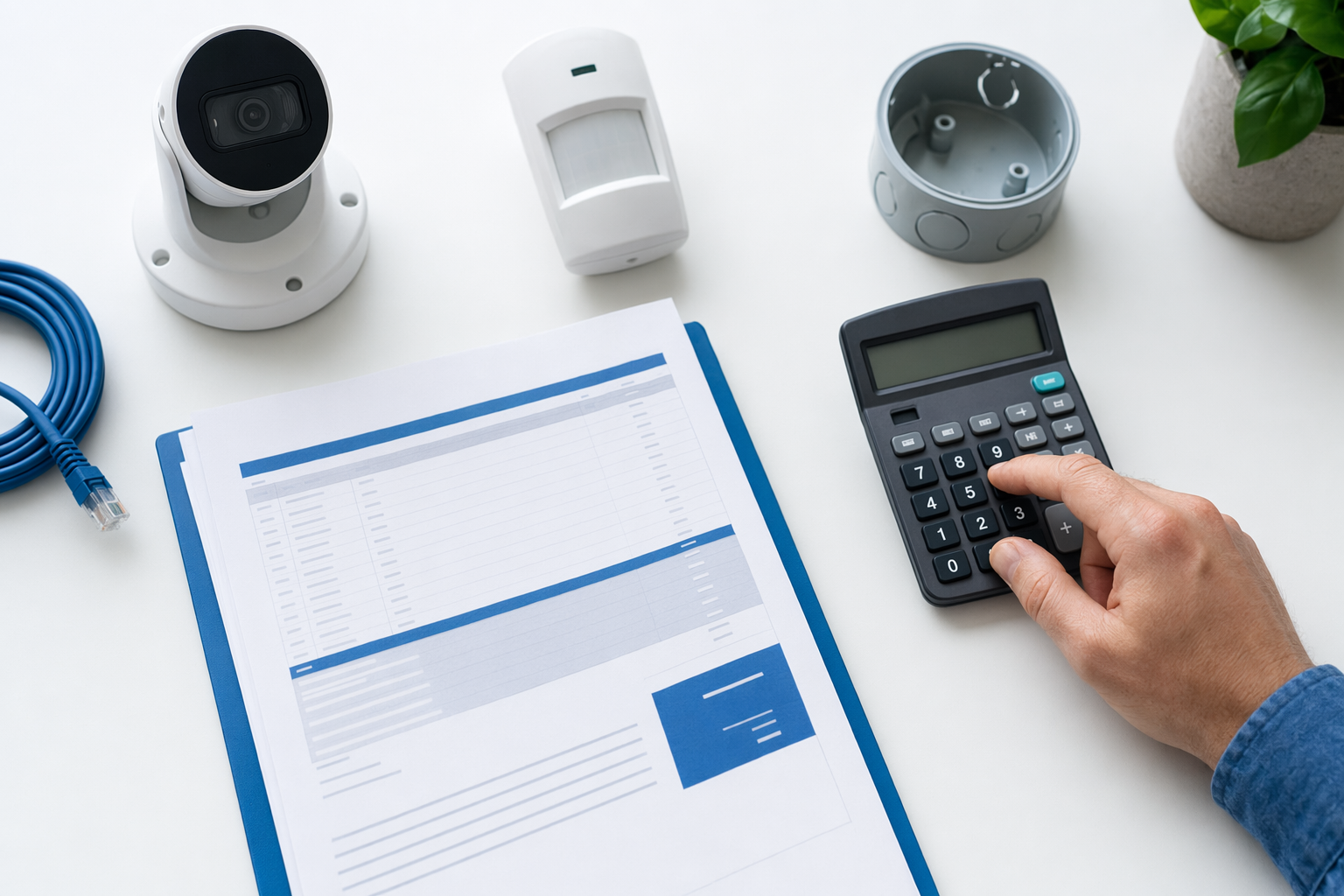
Here is the practical comparison most people need:
- Installation
- Wired: More labor. Best during new construction, remodels, or when cable paths are easy.
- Wireless: Usually faster and less invasive. Good when you do not want walls opened.
- Typical upfront cost
- Wired: Often higher because labor is higher.
- Wireless: Equipment can be affordable, but total cost still depends on sensors, cameras, smart locks, monitoring, installation, and your area.
- Typical equipment ranges
- Alarm equipment is often about $200-$600+.
- Professional installation is often about $100-$400 one-time.
- Security cameras are often about $50-$300 each, plus any cloud storage fee.
- Smart locks or access control are often about $120-$500 per door.
These are typical estimates, not quotes or guarantees. The real price depends on the system, the size and layout of the property, professional monitoring, installation, and the area.
- Power and internet issues
- Wired: Some parts may keep working locally even if Wi-Fi is down, but many systems still depend on power, backup batteries, internet, or cellular for alerts and remote access.
- Wireless: Often easier to place anywhere, but batteries must be replaced and signal strength matters.
- Reliability
- Wired: Often chosen for stable device connections, especially in larger buildings.
- Wireless: Very common and reliable when designed well, but thick walls, metal, distance, and crowded Wi-Fi can affect performance.
- Flexibility
- Wired: Harder to move or expand later.
- Wireless: Easier to add door sensors, cameras, or a panic button later.
- Good fit for renters or temporary spaces
- Wired: Usually not ideal.
- Wireless: Usually the easier choice.
If cameras are a big part of your plan, compare your camera options here.
When wired makes sense, and when wireless makes sense
Choose wired more seriously if:
- You are building, renovating, or already opening walls and ceilings.
- You have a larger property or a small business with multiple rooms, doors, or equipment areas.
- You want a system that may be more permanent and less likely to be moved around later.
- You are planning multiple cameras, access points, or a more structured business setup.
Choose wireless more seriously if:
- You want faster installation with less disruption.
- You rent, may move, or want the option to expand later.
- Your home or shop is smaller or straightforward.
- You want to start with basic protection now and add more over time.
A mixed setup is also common. For example, a business might use wired cameras in key areas and wireless door sensors in harder-to-wire spots. A homeowner might use a wireless alarm system with one or two cameras and add professional monitoring if they want alerts handled by a monitoring center.
No system can promise safety or prevent every crime, loss, injury, or property damage. That is important to say clearly. A good setup can help you respond faster and document events, but it is not a guarantee.
Questions to ask before you choose
Do not let a salesperson push you into "today only" pricing or a long contract before you understand the details. Ask these questions and write down the answers:
- Is this system fully wired, fully wireless, or hybrid?
- What happens during a power outage, internet outage, or low battery situation?
- What features work without Wi-Fi?
- What is included in the base price: keypad, sensors, siren, cameras, app access, smart locks, installation?
- If I want professional monitoring, what is the monthly range? Typical monitoring is often about $15-$60 per month.
- Is there a contract? If yes, how long is it?
- Does the contract auto-renew?
- What are the cancellation and early-termination terms?
- Who owns the equipment after payment?
- Is the company licensed, insured, and properly registered, and can I verify that myself?
Before signing, read the full agreement, especially the monitoring agreement, contract length, monthly fee, auto-renewal language, and cancellation terms. KeepWatchly strongly encourages people to review the alarm contract checklist and avoid signing on the spot under door-to-door or phone pressure.
If you choose to be matched with local companies, your consent to be contacted, including by autodialer, prerecorded or artificial voice, and SMS, is not a condition of any purchase, and you can opt out anytime.
A calm next step
If you are still deciding, use this simple approach:
- List what you want to protect. Front and back doors, first-floor windows, cash area, stock room, driveway, entry gate, office, or one problem area.
- Decide what matters most. Lower upfront cost, less installation work, easier expansion, camera coverage, or monitored alerts.
- Get a few local options. Compare wired, wireless, and hybrid recommendations for your exact layout.
- Verify license and insurance yourself. Some states also license or register alarm-company solicitation and installation.
- Read before you sign. Confirm the monthly fee, contract length, auto-renewal, cancellation rules, and who services the equipment.
KeepWatchly matching is free for homeowners and small businesses. Participating security companies pay a flat fee to be listed and matched. You compare options, choose who to hire, and stay in control. If you want to start, you can get matched with licensed, insured security companies near you.
If you want easier setup and flexibility, wireless is often the simpler choice. If you are renovating, have a bigger property, or want a more permanent setup, wired may fit better. Either way, compare a few licensed, insured local companies, verify the license yourself, and read the contract, monthly fee, auto-renewal, and cancellation terms before signing.
Always hire licensed, insured, registered security companies — and verify the license yourself.
Common questions
Is a wired security system always more reliable than wireless?
Not always. Wired systems are often chosen for stable device connections, especially in larger or more permanent setups. But many wireless systems work very well when the design is right. Reliability depends on the building, signal conditions, power backup, battery maintenance, installation quality, and whether internet or cellular backup is included.
Are wireless systems cheaper?
Often, but not always. Wireless systems can lower installation labor, which helps many homeowners. But total cost still depends on the number of sensors and cameras, smart locks, monitoring, installation, and your area. Typical alarm equipment is about $200-$600+, installation about $100-$400 one-time, cameras about $50-$300 each, and monitoring about $15-$60 per month. These are estimates, not quotes.
What is better for a small business: wired or wireless?
It depends on the space and the risk points. A small shop with a simple layout may do well with wireless or hybrid equipment. A larger office, retail space, or property with multiple entries, inventory areas, or camera needs may lean wired or hybrid. Ask local licensed, insured companies to explain why they recommend one design over another for your layout.
Can KeepWatchly tell me which company or system to buy?
KeepWatchly does not sell, install, monitor, or service systems, and we do not give security, legal, or insurance advice. We are a free matching service that helps you understand your options, compare typical costs, and connect with licensed, insured security companies near you. You choose what to buy, who to hire, and whether to sign a contract after reading it carefully.