The situation: a visit that felt rushed
A homeowner had just moved into a single-family house and wanted basic protection for the doors, a few windows, and the front entry. They were not sure if they needed a burglar alarm, cameras, or 24/7 professional monitoring. Like many people, they wanted something simple and reasonably priced.
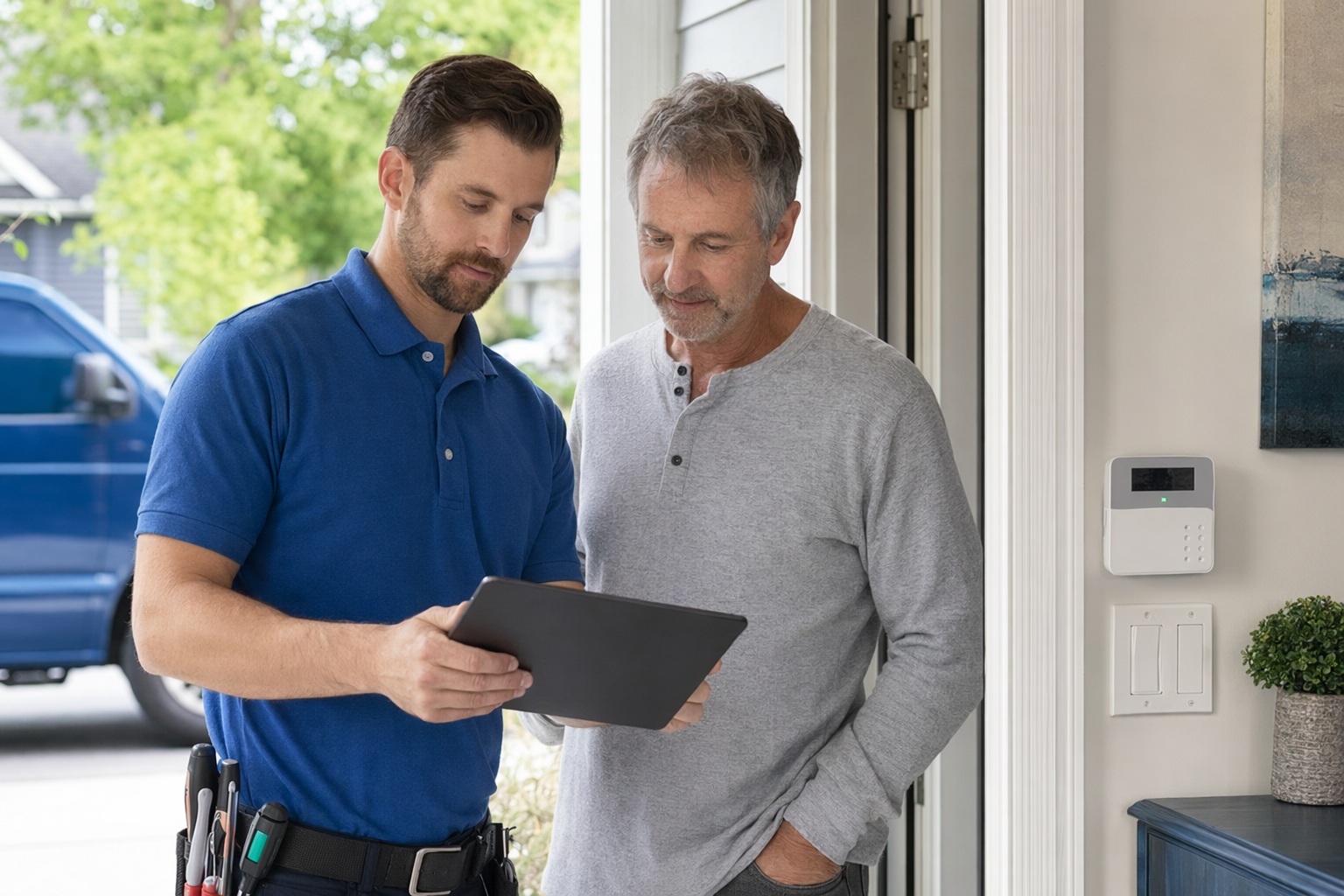
Then a door-to-door salesperson showed up. The pitch sounded urgent. The salesperson said the home needed protection right away and pushed for a signature that day. The monthly price was mentioned, but the full contract length, cancellation terms, equipment ownership, and auto-renewal details were not explained clearly.
That raised a red flag. Security contracts can be expensive to unwind later. A low monthly number can hide a long agreement, added fees, or equipment that costs more than expected over time.
Instead of signing on the spot, the homeowner paused and read up on how to avoid door-to-door alarm sales pressure. That one step changed the whole process.
What they checked before saying yes to anyone
The homeowner made a short checklist and compared the offer against it.
1. What am I protecting?
They listed the real goal first: front door, back door, main-floor windows, and one outdoor camera near the driveway. That kept them from buying extras they did not want.
2. What does this usually cost?
They looked at typical ranges, not promises. For many homes, alarm equipment may run about $200-$600+ depending on the setup. Professional monitoring often falls around $15-$60 per month. Cameras may cost about $50-$300 each plus any cloud-storage fee. Professional installation is often around $100-$400 one time. Actual pricing depends on the system, the size and layout of the property, monitoring, installation, and the area.
3. Who owns the equipment?
They asked whether the equipment was included, financed, leased, or only discounted if they stayed in a long contract.
4. What are the cancellation and renewal terms?
They refused to move forward without reading the full agreement. They checked for early-termination fees, notice deadlines, trial periods, and automatic renewal language.
5. Is the company licensed and insured?
They asked for the company name and then verified the license or registration themselves. Some states also license or register alarm-company solicitation and installation.
For help comparing options and realistic pricing, they also reviewed security system costs before talking to any company again.
How they slowed the process down
The homeowner did something simple but smart: they stopped having the conversation at the doorstep and moved everything into writing.
- They asked for the full contract before any appointment.
- They asked for the monitoring agreement and the monthly fee in writing.
- They asked whether installation was extra.
- They asked whether permits, service calls, moving fees, or camera cloud fees could apply.
- They asked how to cancel, and whether cancellation had to be mailed, emailed, or done by phone.
They also made sure they understood contact consent. If a person asks to be matched with companies, they may be contacted, including by autodialer, prerecorded or artificial voice, and SMS, but consent is not a condition of any purchase and they can opt out anytime. That matters in this industry, especially when people feel pressured by repeated calls or texts.
After that, the homeowner used KeepWatchly's free matching service to hear from local security companies. KeepWatchly did not sell or install anything. It simply helped the homeowner compare local options. The homeowner still chose who to speak with, who to hire, or whether to hire anyone at all.
The key difference was control. No rushed signature. No same-day pressure. Just a clearer way to compare.
The outcome: not the cheapest, but clearer and better fitted
The homeowner ended up choosing a different local company that was licensed, insured, and properly registered for the area. The final setup was modest:
- A basic alarm panel with door and window sensors
- One outdoor camera
- Optional professional monitoring
- Professional installation scheduled in advance
The price was not magically tiny. It was just easier to understand. The equipment and installation were explained separately. The monitoring plan was clear. The homeowner knew the contract length before signing. They also confirmed the cancellation terms and whether the agreement renewed automatically.
That did not mean the system could promise safety. No security measure can guarantee that crime, loss, injury, or property damage will not happen. But the homeowner felt better because they understood what they were buying and what they were agreeing to.
They also learned that a "deal" is not always a deal if the contract is confusing.
Takeaway for homeowners and small business owners
If you are planning security for a home or small business, this story has a simple lesson: slow down before you sign.
Use this approach:
- Decide what you want to protect first
- Compare typical cost ranges, not sales promises
- Hire only licensed, insured companies and verify that yourself
- Read the full contract, monitoring agreement, term length, monthly fee, auto-renewal, and cancellation policy
- Do not sign under door-to-door or phone pressure
- Remember that you compare options, you choose the company, and you read the contract before signing
If you want a practical list of what to review before agreeing to service, see the alarm contract checklist.
Do not sign an alarm contract just because someone says the deal is only good today. Decide what you need, check normal cost ranges, verify the company's license and insurance yourself, and read the cancellation and renewal terms before you agree to anything.
Always hire licensed, insured, registered security companies — and verify the license yourself.
Common questions
Can a low monthly alarm price still be a bad deal?
Yes. A low monthly number can still come with a long contract, early-termination fees, auto-renewal, financed equipment, installation charges, permit costs, or camera cloud fees. Always read the full agreement and the monitoring contract before signing. The real price depends on the system, the property size and layout, monitoring, installation, and the area.
What should I verify before hiring a security company?
Verify that the company is licensed, insured, and properly registered for your state or area, and check that yourself. Ask who will install the system, whether monitoring is optional, who owns the equipment, and how cancellation works. Some states also license or register alarm-company solicitation and installation, so do not rely only on what a salesperson says.
If I ask to be matched, am I required to buy anything?
No. KeepWatchly is a free matching service, not a security company. Participating security companies pay a flat fee to participate, but the homeowner or business is not charged for matching. If you request to be matched, you may be contacted, including by autodialer, prerecorded or artificial voice, and SMS, but consent is not a condition of any purchase and you can opt out anytime. You still compare options and choose whether to hire anyone.